


No one should face cybercrime alone


[Photo: The MiDO student responder team at an incident response training workshop with the AWS Trust & Safety team in Cape Town]
The South African pilot of The Cyber Helpline is live: free, confidential help for anyone hit by online fraud, scams, hacking or harassment.
About two years ago, my husband and I found ourselves talking at dinner about something that had been worrying me deeply: financial sextortion targeting children and teenagers. Criminals reach young people through their phones and social media, coercing them into sharing explicit material and then using these to blackmailing them. The pressure they apply can be terrifying for an adolescent. And AI is just making it so much more scalable and automated. The FBI rates it as one of the fastest-growing cybercrimes, yet most families and schools are not equipped to deal with it. Would our kids know what to do if it happened to them, or to a friend?
That conversation was the start of this project. And the more I looked, the clearer it became that the need does not stop with children. Everyone affected by a cyber incident deserves the same reassurance: someone to turn to, whatever their age.
Support in the moment you don't know what to do
Imagine losing your savings to a SIM-swap scam and not knowing who to call. Or being harassed online by someone who won't stop, and feeling too embarrassed to tell anyone. For many South Africans, that is where the story ends: alone, ashamed and overwhelmed.
That is why this launch means so much to me. The South African pilot of The Cyber Helpline housed by MiDO Academy, in partnership with The Cyber Helpline UK and sponsored by Amazon Web Services (AWS) is a free, confidential service for anyone affected by online fraud, scams, hacked accounts, phishing, harassment, sextortion, identity theft or malware.
The Cyber Helpline is a proven, volunteer-led model already operating in the UK and the US. Since 2018, more than two million people have accessed its guidance, and over 100,000 have received direct support. What its casework shows, and what we have built into the new, tailored South African playbooks is that victims suffer far more than financial loss. Shame, anxiety, depression and lasting distress are common, and recovery works best when support addresses both the technical and the emotional impact of an incident.
Victims in South Africa can now access free, confidential support at thecyberhelpline.com.
What the early data tells us
The team has been quietly collecting South African cases since December, and one number stands out: 74% of those who answered the question had not reported their experience to the police. The data doesn't tell us why, but it suggests the helpline is reaching people whose experiences are invisible to the authorities.
A few other early patterns:
Investment scams are the most common named attack type, followed by online shopping and auction fraud.
Harassment and sextortion cases are also coming through to the service.
Most people reaching out are working-age adults: around nine in ten recorded ages fall between 18 and 65, with the largest groups aged 25–39 and 40–65.
As a researcher, I'm interested in why people don't report (shame, lack of trust in the institutions, not knowing where to turn?) and this sits at the heart of my work on human susceptibility to online manipulation. Every case logged sharpens the picture, shapes how we train responders and helps us reach the people who need support most.
How it works
Unlike formal reporting mechanisms, the helpline focuses on helping victims understand what has happened, and to guide them step by step- from securing accounts and devices to preserving evidence, knowing where to report and taking practical steps to protect themselves from further harm.
You would start with the online chatbot, available 24/7 at thecyberhelpline.com It asks a few anonymous questions and gives you step-by-step guidance on securing accounts, preserving evidence and knowing where to report.
If your case needs more support, you’ll be passed to a trained local responder who follows up through the platform.
If you know someone who has been through this, please share the link with them. You don’t need to have it all figured out to ask for help.
NB: The helpline doesn’t recover money or investigate crimes, but it helps victims understand what happened and provides guidance. It will refer you to banks, the South African Police Service or specialist services where appropriate. It’s available to anyone in South Africa aged 13 and over who has been affected by a cyber incident.
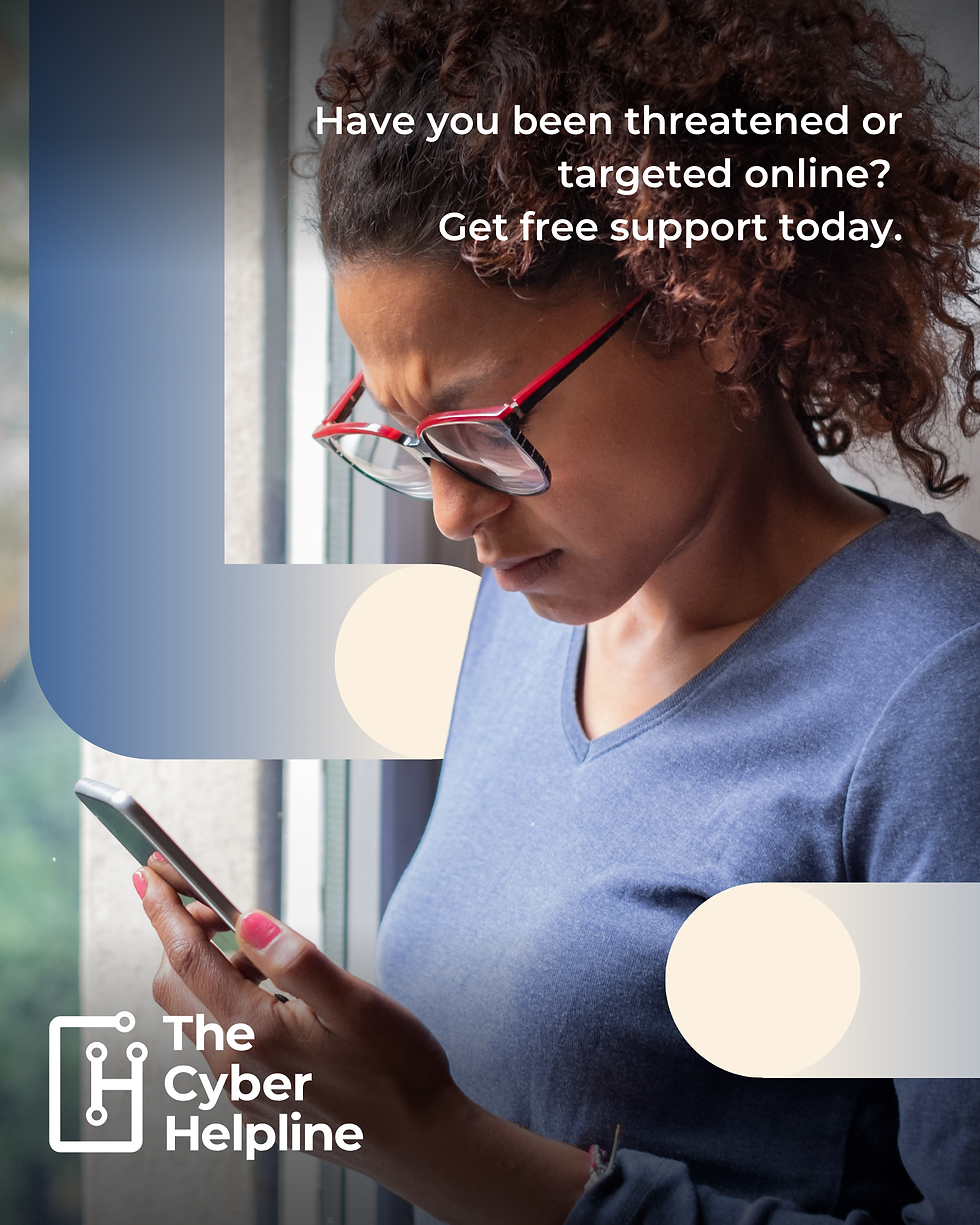
More than victim support: a youth development project
The pilot is also a career launchpad. The Cyber Helpline UK provides the operational model and responder training, AWS funds the pilot and hosts the service, and MiDO Academy houses the project and mobilises local student volunteers. Student responders receive a stipend, get deep training and work alongside experienced supervisors, building real-world incident response skills as they start their careers.
The young people answering these cases are from the very communities most affected by cybercrime. Every case they handle is both help for a victim and a step into the cybersecurity profession.
Come to the official launch event:
The pilot is already live, and on 5 November we'll hold the official launch event. a chance to meet the people behind the service, hear what we're learning and find out how to get involved. I'd love to see you there.
Date: 5 November 2026, 11:00–14:00
Venue: AWS Offices, 29 Gogosoa Street, Observatory, Cape Town
Two other ways to help: join or donate to the Cyber Step Challenge this October, it’s just R100 per person to enter
1️⃣ Big Team Challenge app → cyberstepchallenge.bigteamchallenge.com
2️⃣ Create your team, rope in your security crew or exec peers
No one should face cybercrime alone. Thank you!!
I’m involved with this initiative through both KnowBe4 and MiDO Academy.



Comments